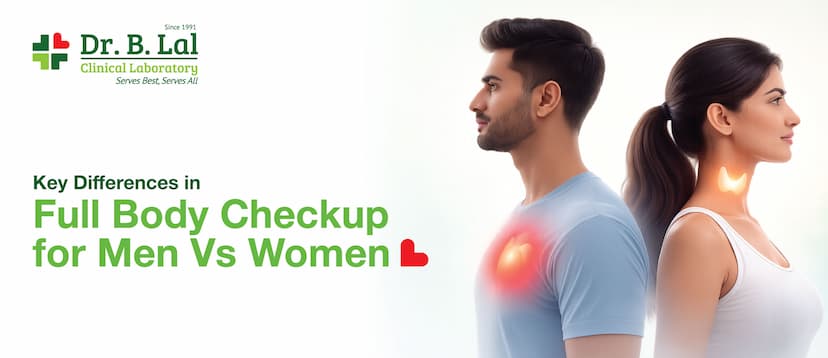
Full body checkups are often seen as a “standard package” for everyone. Same blood tests, same scans, same reports.
But in reality, there are important differences in full body checkup for men vs women.
Because men and women have different hormones, different risk factors, and different health concerns at various stages of life. So ideally, health screening should reflect that.
Let’s understand what actually changes, and why it matters.
Why Gender-Specific Health Screening Is Important
Men and women don’t just differ biologically — their disease patterns also vary.
For example:
- Women are more prone to thyroid disorders.
- Men have a higher risk of early heart disease.
- Women face reproductive health issues like PCOS or cervical conditions.
- Men are at risk for prostate-related problems after a certain age.
So a full body checkup should not always be identical.
It should be tailored, at least slightly.
Key Diffrences in Full Body Checkup for Men Vs Women
Here are the main areas where screening differs.
1. Hormonal Tests
In Women:
- Hormone testing may include:
- Thyroid profile
- Estrogen
- Progesterone
- LH, FSH
- Prolactin
These are often checked in cases of irregular periods, infertility, PCOS symptoms, or menopause-related concerns.
In Men:
Men usually don’t require reproductive hormone panels routinely, but:
- Testosterone levels may be tested
- Thyroid profile (if symptoms exist)
Hormonal imbalance in men is less commonly screened unless symptoms appear.
2. Reproductive Health Screening
This is one of the biggest differences.
For Women:
Full body checkups may include:
- Pap smear (for cervical cancer screening)
- Pelvic ultrasound
- Breast examination or mammography (depending on age)
These tests are essential because certain cancers are gender-specific.
For Men:
Men may require:
- Prostate-Specific Antigen (PSA) test after age 45–50
- Prostate examination
- Testicular examination (if needed)
Prostate health becomes a key focus in older males.
3. Heart Disease Risk Assessment
Both men and women need heart screening, but the risk patterns differ.
Men tend to develop heart disease earlier compared to women.
So for men, a full body checkup may emphasize:
- Lipid profile
- ECG
- Stress test (if risk factors exist)
Women are somewhat protected by estrogen before menopause. But after menopause, heart risk increases sharply.
So age plays a role here.
4. Bone Health
Women are more prone to osteoporosis, especially after menopause.
So a complete checkup for women above 40–45 years may include:
- Vitamin D levels
- Calcium levels
- Bone density scan
Men can also develop osteoporosis, but it is less common and usually screened later in life.
5. Anemia Screening
Iron deficiency anemia is far more common in women due to menstrual blood loss.
So in women:
- Hemoglobin levels
- Iron studies
- Become particularly important.
Men can have anemia too, but the causes often differ and are investigated differently.
6. Thyroid Testing
Women are significantly more likely to develop thyroid disorders.
So thyroid profile is often included routinely in female health packages, even without symptoms.
In men, thyroid tests are usually done if symptoms exist.
7. Diabetes and Metabolic Screening
For both men and women, the following are common:
- Fasting blood sugar
- HbA1c
- Lipid profile
However, women with PCOS may have a higher risk of insulin resistance at a younger age.
So screening sometimes starts earlier for them.
8. Cancer Screening Differences
Cancer screening differs quite clearly.
Women:
- Breast cancer screening
- Cervical cancer screening
Men:
- Prostate cancer screening
General cancer markers may be common, but gender-specific screenings matter most.
Age Matters More Than Gender Alone
It’s not only about men vs women. Age plays a huge role.
For example:
- A 25-year-old woman may not need mammography.
- A 55-year-old man may need prostate screening.
- A postmenopausal woman needs bone density testing.
So the ideal checkup depends on both gender and age.
One-size-fits-all packages are convenient, but not always complete.
Lifestyle Factors Also Influence Testing
Beyond gender, lifestyle affects screening needs:
Smoking
- Alcohol intake
- Sedentary habits
- Family history
- Obesity
For example, a male smoker may require lung function testing. A female with strong family history of breast cancer may need earlier screening.
So personalization is important.
Should Men and Women Choose Different Full Body Packages?
In many cases, yes.
Basic blood tests may be common:
- Complete blood count
- Liver function
- Kidney function
- Blood sugar
- Lipid profile
But gender-specific additions make the screening more meaningful.
It’s not about doing more tests unnecessarily. It’s about doing the right ones.
When Should You Start Regular Full Body Checkups?
General recommendations:
- After 25–30 years: Basic annual screening
- After 40 years: More detailed health panels
- After 50 years: Age-specific cancer and heart screening
Earlier testing may be needed if symptoms exist.
Waiting for symptoms is usually not ideal.
Final Thoughts
The key diffrences in full body checkup for men vs women are mainly related to hormones, reproductive organs, cancer risks, and bone health.
While many core tests remain the same, gender-specific screening makes preventive care more effective.
Health screening should not just be routine — it should be relevant.
If you’re planning a full body checkup, choose a package that reflects your age, gender, and risk profile. And if unsure, consult a doctor to customize it.
Because prevention works best when it’s personalised.